Author Archives: womenfromthebook

The ageless pursuit of health

In previous posts we explored general public health conditions in the Roman Empire and the province of Palestine. While there were obvious concerns and attempts to provide sanitation and control disease, the fact is, life often hung precariously in the balance.

Life is short

Lynn H. Cohick, in her book Women in the World of the Earliest Christians (2009) provides grim data: “Using statistics from modern, preindustrial communities to estimate demographics in the ancient world, we find that the average life expectancy was twenty-five years” (119). Dr. Paul Kitchen is a little more optimistic: “If a person lived beyond the dangerous years of childhood, he or she might expect to live until the fifties….However we know that few people lived beyond the biblical threescore years and ten.”[1]

Sickness was a constant threat, and its first line of treatment is strangely familiar—the help of extended family, and home remedies (many of which were probably passed down through generations). That failing, a physician was sought, depending on the family’s ability to pay.

General practitioners

According to Dr. Kitchen, physicians of the day wore several different hats, acting as pharmacist, physiologist, doctor/physician, and surgeon. They traveled (perhaps on a circuit), made home visits, and performed surgery on location when necessary.

Alfred Edersheim notes that “among the regular Temple officials there was a medical man, whose duty it was to attend to the priesthood who, from ministering barefoot, must have been specially liable to certain diseases. The Rabbis ordained that every town must have at least one physician, who was also to be qualified to practice surgery, or else a physician and a surgeon.” [2]

Regarding treatment options, Edersheim continues: “Cold-water compresses, the external and internal use of oil and of wine, baths (medicated and other), and a certain diet, were carefully indicated in special diseases” (page 152). Page twenty-two of Dr. Kitchen’s article contains a table of suggested remedies available to 1st century doctors in Palestine.[3]Here are a few that might have been of particular interest to mothers and families:

Feverfew

Feverfew (Photo credit: Wikipedia)

  • Headache: chamomile, aloe, lemon balm, pepper
  • Wound care: balsam, olive oil, wine, honey, balm, myrrh or frankincense, hyssop, juniper, fig sap, yarrow oil
  • Fever: wormwood
  • Morning sickness: cumin, feverfew
  • To improve lactation: castor oil, fenugreek
  • Anxiety: fennel
  • Sore feet: wormwood
  • Worms: laurel, wormwood

Wikipedia adds these for more general use: [4]

  • Elecampane: used to help with digestion
  • Garlic: beneficial for health, particularly of the heart
  • Fenugreek: used in the treatment of pneumonia
  • Silphium: used for a wide variety of ailments and conditions—especially for birth control [5]
  • Willow: used as an antiseptic

Some common treatments mentioned in the Bible

Holman’s Bible Dictionary notes:

“The illness of Hezekiah was treated by applying a poultice of figs (Isaiah 38:21). Hezekiah almost certainly had some type of acute bacterial infection of the skin. Prior to the discovery of antibiotics, these dangerous infections could cause death. Although it is unlikely that the figs had any medicinal value, they were probably applied in the form of a hot compress. Heat is an effective treatment for infections of the skin. …Medical care in biblical times frequently employed the use of different kinds of salves and ointments. Olive oil was used widely, either alone or as an ingredient in ointments. The use of oil for the treatment of wounds is mentioned in Isaiah 1:6 and Luke 10:34. Oil also became a symbol of medicine, and its use was coupled with prayer for the ill (Mark 6:13; James 5:14).”[6]

Did you say cabbage?

Here is an interesting bit of trivia: “Cabbage has been grown in the West since approximately 400 BC. It is a plant that has high therapeutic qualities. Since ancient Greek times cabbage was used as a remedy for the digestive system, skin problems, fever, and a fortifier for aching joints. The Romans used to eat raw cabbage when indulging in too much alcohol, to avoid getting drunk. Cabbage was always on hand for treating most family problems….”[7]

One last question

One might ask if there were hospitals during this period of time. The answer is yes, but not like the familiar high-rises we visit today. The Romans built such facilities to care for their wounded soldiers. Separate buildings like barracks were constructed within the camp, mainly to keep the smell and screaming of the injured from demoralizing their sleeping comrades. Some of the larger camps featured operating rooms, baths, kitchens, latrines with running water, and a dispensary.[8] There is evidence that one such hospital existed in Jerusalem.

It took some time before hospital facilities became available to the general population. Again, from Dr. Kitchen: “Before the Christian era there is no evidence of hospitals or sanatoria for the sick in villages or in Roman cities in that day. Most medicine was practiced by the patient’s bedside. It was a personal or family affair and there is not sense of public duty towards the sick.”

In summary

The Gospel accounts record wonderful instances of crowds of the sick and afflicted thronging Jesus to experience His miraculous healing. Sadly, though, throughout much of the Roman Empire, even in Palestine, most had no access to such a blessing. Instead, they relied on Roman administrators to introduce engineering innovations designed to improve public health, and to slow the spread of disease.

Ordinary families depended on their own resources to deal with all-too-familiar sicknesses, and death. Wives, mothers, and female family members were the principal caregivers in such cases.

It is hoped these brief excursions into life in 1st century Palestine have given readers a new appreciation of its women, and the daunting and often heart-breaking challenges they faced.


[2] Sketches of Jewish Social Life, Alfred Edersheim (1994), Updated edition, Hendrickson Pub., page 151

[3] See Note 1.

[5] Lynn H. Cohick mentions a discussion by the Greek physician, Soranus of Ephesus, addressing  the topic of contraceptive measures. These reportedly included the use of olive oil, cedar resin, or honey on the opening of the uterus, or plugging the opening with fine wool (page 150).

[8] Kitchen, page 6, “Did hospitals exist in towns in the provinces of the Empire?”

“Unclean!”: the scourge of leprosy

The term “leprosy stigma” means a strong feeling of being shameful and unaccepted. The physical appearance of a person with leprosy can be so disturbing that the afflicted are shunned. Until the 20th century, lepers were consigned to a leprosarium because there were no effective ways to deal with the disease. It was contagious, and there was no cure.

Descriptions of leprosy and its medicaments have been found in early records from India, China and Egypt. In ancient treatments, physicians bathed the afflicted in sheep’s blood. They injected patients with arsenic, creosote and/or mercury. They tried cobra venom, scorpion venom and bee stings. And none of them worked. Early practitioners were “shooting in the dark” when it came to leprosy.

Difficult to define

The Hebrew word tsara’ath is translated leprosy.The precise meaning of the word leprosy in both the Old and New Testaments is still in dispute, but it possibly includes the modern Hansen’s disease (especially in the New Testament) and infectious skin diseases.

Jewish high priest wearing a hoshen, and Levit...

Jewish high priest wearing a hoshen, and Levites in ancient Judah. (Photo credit: Wikipedia)

In Israel it was the responsibility of priests to distinguish between minor skin irritations and leprosy (Leviticus 13), and to determine when one was deemed cleansed of it. There is some discussion as to whether this was a contagious disease or essentially a matter of being ceremonially unclean. Whatever the case, it is quite clear that one had to live outside the camp of Israel until the priests were certain the disease was gone.

Herein lies the controversy

If leprosy of the scriptures was indeed Hansen’s disease, it initially manifested itself as superficial sores before spreading to other parts of the body. In the later stages of the disease, sufferers developed facial tumors, claw hands, twisted limbs, a loss of pain sensation and blindness. However, it is possible Hansen’s is not related at all to the “leprosy” the priests dealt with. That suggests a better picture for ancient Israel because no one would have to live outside the camp very long.

The following citation illustrates the emotion attached to the specter of Hansen’s disease and the term “leper”:

“Incurable by man, many believed God inflicted the curse of leprosy upon people for the sins they committed. In fact, those with leprosy were so despised and loathed that they were not allowed to live in any community with their own people (Numbers 5:2). Among the sixty-one defilements of ancient Jewish laws, leprosy was second only to a dead body in seriousness. A leper wasn’t allowed to come within six feet of any other human, including his own family. The disease was considered so revolting that the leper wasn’t permitted to come within 150 feet of anyone when the wind was blowing. Lepers lived in a community with other lepers until they either got better or died. This was the only way the people knew to contain the spread of the contagious forms of leprosy.”[1]

The Jewish Encyclopedia, however, offers another observation:

“In the Biblical description, one is immediately impressed by the absence of all allusion to the hideous facial deformity, the loss of feeling, and the rotting of the members. If such conspicuous manifestations had existed they could not possibly have escaped observation. The Levitical code prescribed that the several examinations of the person suspected should be made at intervals of seven days, thus enabling the priest to note the progress of the disease. Leprosy is an exceedingly slow disease, particularly in the beginning, and a fortnight would show absolutely no change in the vast majority of cases. Moreover, the “lepra Hebræorum” was a curable disease. When the leper was cured the priest made an atonement before the Lord, and expiatory sacrifices in the form of a sin-offering and a trespass-offering were made also. Modern leprosy is, except in isolated instances, incurable.”

Scientific advances

English: Gerhard Amauer Hansen, Norwegian bact...

English: Gerhard Amauer Hansen, Norwegian bacteriologist who discovered the bacillum for leprosy. Since this photograph was likely taken before 1923 as Hansen died in 1912, it is public domain in the United States. (Photo credit: Wikipedia)

In 1873 Gerhard Hansen identified and described mycobacterium leprae, the bacteria that causes leprosy. Although it was thought of as a skin disease, the bacterium actually attacks the peripheral nervous system. It shows up initially on the skin and spreads by skin contact and droplets from the respiratory tract. It is still classified as contagious but no longer considered highly contagious. With the development of sulfur drugs and programs supported by the World Health Organization, the incidence of leprosy has dramatically decreased worldwide. It hasn’t been totally eradicated yet, and leper colonies exist in India, China, Romania, Egypt, Nepal, Somalia, Liberia, Vietnam and Japan.[2] But it is no longer considered incurable.

Apart from Jesus’ work of compassion, it wasn’t until “the introduction of multidrug therapy (MDT) in the early 1980s that the disease could be diagnosed and treated successfully within the community”[3] For thousands of years it was handled outside the community because there was no other recourse.

An occasion to glorify

Not much is said about leprosy in the New Testament except for incidences of miraculous healing. It became an occasion to glorify God when Jesus healed lepers and enabled them to live as free beings.

That Jesus healed ten lepers and only one returned to thank Him is stunning. Jesus marveled at this oversight, this lack of living commensurately. He had released them from strict isolation into life in the community. They forgot to come back and thank Him. ♦ Mary Hendren


[1] “Why is leprosy talked about so much in the Bible?” Gotquestions.org

[2] “Leprosy,” Wikipedia

[3] “Leprosy,” Wikipedia

Disease: striving to meet the challenge 1st century style

Since disease has been a factor in the lives of individuals and nations for eons, it stands to reason there have been many attempts to slow or eradicate its spread altogether. That was true in the 1st century Roman Empire and continues to this day.

Public health measures from the Torah

When it came to implementing basic principles of health and sanitation, the Jews in Palestine benefited tremendously from their law. YHWH gave instructions early in their history that figured prominently in the welfare of Israel as a nation. Note the following examples:

  • Quarantine (Leviticus 13:46)
  • Laws concerning washing and bathing[1] (Leviticus 15; Numbers 19)
  • Food laws (Leviticus 11)[2]
  • Proper disposal of human waste, reducing the risk of typhoid, cholera, and dysentery (Deuteronomy 23:12-13)
  • The Sabbath, a weekly day of rest from exhausting labors and stress (Exodus 20:8-11)

The Romans and public health

The Romans, too, were concerned about the health of their citizenry. Hygiene was of major importance, as were exercise, and clean drinking water. Throughout the environs of their empire, the disposal of sewage presented a challenge. Historians record that it was common to find human and animal excrement on city streets, even in Rome itself. Of course, such filth resulted in not only a stench that fouled the air for miles, but also attracted swarms of flies and encouraged the spread of disease.

Roman engineers addressed street sanitation by constructing underground and above-ground aqueducts to supply water to sewers (installed under city streets) and public bathhouses.[3]In some locations, toilets with running
water were put in place. Dr. Paul Kitchen mentions a large public bath in the city of Nazareth. (See link in footnote 1.)

Ancient Latrine in Ephesus

Ancient Latrine in Ephesus (Photo credit: Ken and Nyetta)

Even with these innovations disease managed to thrive, partially due to the public bath by-product of dirty, stagnant water, teeming with bacteria, and the consequence of using lead pipes as conduits for water—that of lead poisoning.

While many efforts centered mainly in large cities, rural towns and villages grappled with the same challenges but with little assistance.  It would take decades for such life-saving initiatives to spread throughout the realm.

***

In the next blogs, we will examine a dreaded disease,  the “medical profession,” and treatment options for the average person during New Testament times.


[1] Jeremiah 2:22 mentions washing with lye and soap. According to Rendel Short, The Bible and Modern Medicine (1952) page 11, soap making has a long history. “They used lye (natron) a fossil carbonate of soda boiled in olive oil with ash from certain plants added….” Cited in note 43, http://paulkitchen.wikispaces.com/file/view/MEDICINE_AND_SURGERY_IN_THE__1st_CENTURY.v10..pdf

[2] Some who study the history of disease note that not eating pork probably lessened the chances of transmitting tapeworms.

[3] “The baths were used by both rich and poor. Most Roman settlements contained a public bath of some sort. In Britain the most famous are at Bath (then called Aquae Sulis by the Romans). The entrance fee for the baths were extremely small – usually about a quadrans (1/16th of a penny!). This extremely low price was to ensure that no-one did not bathe because it was too expensive.From the writings of Seneca, we know that the Romans spent large sums of money building their baths. Seneca wrote about baths with walls covered in huge mirrors and marble with water coming out of silver taps! “And I’m talking only about the common people.” (Seneca) The baths of the rich included waterfalls according to Seneca. Even people who were sick were encouraged to bathe as it was felt that this would help them to regain their good health.” http://www.historylearningsite.co.uk/medicine_in_ancient_rome.htm

Life and Death in 1st Century C.E. Palestine

“Now when Jesus had crossed over again by boat to the other side, a great multitude gathered to Him; and He was by the sea. And behold, one of the rulers of the synagogue came, Jairus by name. And when he saw Him, he fell at His feet and begged Him earnestly, saying, “My little daughter lies at the point of death. Come and lay Your hands on her, that she may be healed, and she will live.” So Jesus went with him, and a great multitude followed Him and thronged Him” (Mark 5:21-24).

 Who is not touched by the anguish of this father’s poignant words—Jairus, a ruler of the synagogue, now humbly begging Jesus to heal his dying child? She was his only daughter, a mere twelve years of age. Death was no stranger to the families of Palestine and the extended Greco-Roman Empire. Galilean babies often died young or in childbirth, as did their mothers. For all children of a family to survive into adulthood was a rare thing indeed. Thankfully this episode had a happy ending.

Afflictions prevalent

Scenes of suffering and petition replay throughout the pages of the Gospels—only the individuals’ circumstances change. In the same chapter in Mark, Jesus healed a woman suffering from a hemorrhagic condition, and a man who was demon possessed. When one reads the Gospel accounts with an eye to ailments and healing, it becomes apparent many suffered a variety of afflictions, and all sought relief—by miracle, or from rudimentary (by modern standards) methods of the day.

Dr. Paul Kitchen, in his paper, “Medicine and Surgery in the 1st Century C.E. in Galilee,”[1] lists diseases that likely existed at that time:[2]  

English: This child is showning the pan-corpor...

English: This child is showning the pan-corporeal rash due to the smallpox variola major virus. Smallpox is a serious, contagious, and sometimes fatal infectious disease. The name smallpox is derived from the Latin word for “spotted” and refers to the raised bumps that appear on the face and body of an infected person. (Photo credit: Wikipedia)

  • Some types of cancer
  • Infectious diseases
  • Skin diseases, including leprosy, and probably head lice and scabies
  • Parasitic infections
  • Pneumonia
  • Tuberculosis
  • Poliomyelitis
  • Smallpox killed many, especially in the crowded cities in the Roman Empire.
  • Anthrax swept the Empire in 80 C.E.
  • Malaria killed many in Rome itself.

What Jesus saw

A quick search through A. T. Robertson’s A Harmony of the Gospels reveals accounts of those suffering from a variety of health issues coming to Jesus for His healing. Some maladies are noted generally, as in Luke 7:21, where Luke records that Jesus “cured many of infirmities, afflictions….” Others, however, are quite specific. For instance:

  • Fever (John 4:46-54)
  • Leprosy (Mark 1:40-45)
  • Paralysis or palsy (KJV) (Matthew 8:6)
  • Blindness (Matthew 9:27-31)
  • Deafness (Mark 7:32-37)
  • Withered hand (Mark 3:3)
  • Multiple accounts of demon possession

What about the general population? 

The next blogs will explore what treatments and remedies were available to the general populace in the Greco-Roman Empire during the first century.


[2] Dr. Kitchen comments that due to the absence of Hebrew literature addressing disease or medicine in ancient times, he relied on the Dead Sea Scrolls and writings of the Rabbis for his sub-topic: “What illnesses existed at the time of Jesus?”

Coming next week….

This week we touched on the topic of Bible women in the workplace, profiling two in the New Testament. One of the challenges in looking back to ancient times is scanty physical evidence or few existing records. Because of that, curious students of the Bible often must look at the cultural norms surrounding a particular woman, read accounts written by people of the time (the works of Josephus, for instance) and then, if you will, “tease out” a perception of what she might have been like, or how she might have interacted in her community. I believe Mary Hendren’s post, “Purple,” is an excellent example of this process at work.

Next week: sickness and health

It is obvious when reading the Gospels that Christ spent much of his ministry healing the sick. Sickness and suffering was (and is) a fact of life, and every generation has to deal with that reality—especially women who generally are the caregivers. Join us for a glimpse of the health challenges and environmental conditions facing people in first-century Palestine.

Stamp for marking semi-solid sticks of eye oin...

Stamp for marking semi-solid sticks of eye ointments (collyria) before they harden, inscribed with four remedies prepared with saffron by a Junius Taurus from a prescription of a Pacius. Stone, 1st-3rd centuries AD. Said to be from Naix, northern France. (Photo credit: Wikipedia)

Until then, thanks for joining us on this journey of discovery!

Purple

And on the Sabbath day we went out of the city to the riverside, where prayer was customarily made; and we sat down and spoke to the women who met there.

 Now a certain woman named Lydia heard us. She was a seller of purple from the city of Thyatira, who worshiped God. The Lord opened her heart to heed the things spoken by Paul. And when she and her household were baptized, she begged us, saying, “If you have judged me to be faithful to the Lord, come to my house and stay.” So she persuaded us. (Acts 16:13-15)

In one paragraph, Luke introduces Lydia, the first lady converted through Paul’s preaching in Philippi. Lydia owned a business and a home. She hosted Paul and his companions while they were in Philippi. Scholars have studied her name, her business, and her role in the church at Philippi to enhance Luke’s description.

Person or place?

Commentators say the lady’s proper name may not have been Lydia. She may have been known as the Lydian woman because she came from the region of Lydia in Asia Minor. Although Lydia might have been her proper name, “it seems more likely that it merely means ‘the Lydian,’ and that it was the designation by which she was originally known in Philippi.” [1] Some commentators propose that the lady was actually either Euodia or Syntyche referred to in Phil.4:2.[2]  Luke identified her as Lydia, a common name for women in Phoenicia at one time, and mentioned no other name for her.

Her heritage

Was she a Jew? Based on the words that she was “a worshiper of God,” scholars believe Lydia was not a Jew by birth but was a Jewish proselyte.[3]  Lydia kept the Sabbath. She was among the women who assembled by the riverside and heard Paul preach about Jesus Christ.

Her trade

What did it mean to be a “seller of purple”? Did she sell dye? Purple cloth? Purple garments? Scholars say she could have sold any of these items or a combination of them all and be considered a “seller of purple.” One source suggests she sold cloth and garments of deep turkey red, commonly made in her hometown of Thyatira.

From snails to dye

Spiny dye-murex used to make purple in Pliny's day

Spiny dye-murex used to make purple in Pliny’s day (Photo credit: Wikipedia)

The remarkable Tyrian purple was made from a secretion of the predatory sea snail, Murex brandaris. Murex snails flourished in the eastern Mediterranean along the coast of Phoenicia. The Tyrians learned a “secret method of extracting the glandular substance from which dye was produced.” The Roman writer Vitruvius stated that Tyrian “purple exceeds all colors in costliness and superiority of its delightful effect.”[4] Because thousands of snails were crushed to produce a small amount of dye, it was expensive. Until the Murex snails were over-harvested, the wealth of Tyre was based primarily on the manufacture of dye and trade in purple cloth.

Commercial centers

Tyre operated a famous dye-works. Purple silk from Tyre was the finest fabric available. Wearing Tyrian purple garments—silk, cotton, or wool—symbolized power. “There was great demand for this fabric as it was used on the official toga at Rome and in Roman colonies.”[5]

Thyatira, a city in the region of Lydia, also operated a dye-works, and it was famous for the color red. Dyers in Thyatira used a red vegetable dye made from madder root. “The waters of Thyatira are said to be so well adapted to dyeing that in no place can the scarlet cloth of which fezes are made be so brilliantly or so permanently dyed as here.”[6] The dyers developed a process involving “sumac and oak galls, calf’s blood, sheep’s dung, oil, soda, alum and a solution of tin” (“Rubia,” Wikipedia). In time the Lydian guilds produced purple cloth that competed with the fabric of Tyre. It was said that the Lydians were “celebrated for their dyeing, in which they inherited the reputation of the Tyrians.”[7]

To summarize, scholars suggest Lydia (the Lydian lady) sold purple fabric that was woven and dyed in Thyatira, from dye manufactured in Tyre.

What do I believe?

I believe Lydia was a wise and influential person. I think she had good business sense and an eye for quality. I imagine she traveled to Tyre and Thyatira on buying trips and related interesting travel stories. I picture her as competent in what she undertook, thorough in following procedures, and a good negotiator.

I believe God is amazing. He created a unique snail which supplied a gorgeous purple that would clothe the mighty (Revelation 17:4) and would figure in the rise and fall of a great empire (Ezekiel 27:7; Isaiah 23:8). He arranged for a seller of that purple to hear Paul preach on the Sabbath. He opened her mind and the minds of those in her household. With them He began the Church of God in Philippi.  ♦ Mary Hendren


[1] “Lydia,” The Hastings’ Dictionary of the Bible

[2] “The conversion of Lydia,” The Expositor’s Bible Commentary

[3] “Lydia,” The New Unger’s Bible Dictionary

[4] “Hexaplex trunculus,” Wikipedia

[5] “Note, Acts 16:14,” Robertson Word Pictures, on-line

[6] “Thyatira,” The New Unger’s Bible Dictionary

[7] “Note on Acts 16:14,” JFB on-line

P & A Tent Makers

The Jews in Rome were fighting with one another about the person of Jesus Christ. Was He the Messiah, or was He not? To end this religious disturbance, Emperor Claudius issued an edict expelling all Jews from Rome.  “As the Jews were indulging in constant riots at the instigation of Chrestus, he [Claudius] banished them from Rome” (Expositor’s Bible Commentary, Vol. 9, 1981 Edition, p. 481).  Priscilla and Aquila, Jewish Christians, packed up their business and moved to Corinth.

It is fortunate that their tent making business was portable and could be set up in elsewhere. Tent making at that time was a respected and profitable business. Priscilla and Aquila appear to have been joint owners of the business, and it is likely they set up shop in central Corinth.

How large was their shop? Historians say that prosperous tent makers hired subcontractors: weavers, leather workers and assemblers. After a time in Corinth, their shop probably expanded and employed a number of workers. Expositor’s Commentary states that Priscilla and Aquila “owned a tent making and leather-working firm, with branches in Rome, Corinth, and Ephesus” (Expositor’s Bible Commentary, 1981 Edition, Vol. 9, p. 481).

What kind of tents did they make? Several kinds of tents were commonly made at the time: black goat hair tents, small leather tents for soldiers, woven linen canopies for shade, and umbrellas. Consistently the commentaries mention goat hair tents, and if their tent making business produced goat hair tents along with leather/skin tents, they would have employed leather workers, spinners, weavers, and those skilled at sewing woven panels into tents.

Goat hair tents are still manufactured today (“The Goat Hair Tent”). Commentators state that the skills required to make today’s woven tents are the methods that have been passed on from craftsmen in ancient times.

However, the kind of tents manufactured by the business is not what’s really important in their story. The tent making profession linked Priscilla and Aquila with the apostle Paul and opened for them a remarkable interval of Christian service. Paul met them when he applied to work as a journeyman tentmaker in their shop. He came to Corinth on a missionary journey and planned to support himself as a tentmaker. What a God-ordained association: Paul was led to tentmakers, Christians, who were probably converted in Rome. Theirs must have been a productive friendship as Paul refers to them as “fellow workers in Christ Jesus” (Romans 16:3).

Nowhere in Paul’s letters does he ever mention concern for how the couple functioned as business partners, how they treated him or how they served as hosts of the churches that met in their homes. When Paul left for Ephesus, Priscilla and Aquila went with him. Commentators suggest they left Corinth to open a branch in Ephesus. They may have left as a business decision, but they traveled with Paul. Scripture does not give the reason they relocated to Ephesus or what financial aid they gave Paul in his ministry there.

Priscilla and Aquila remained in Ephesus four or five years and hosted a congregation of believers in their home (1Cor. 16:19). They were probably present or involved in helping Paul during the riot provoked by Demetrius the silversmith (Acts 19:21-41). Paul may have had this frightening episode in mind when he wrote that Priscilla and Aquila “risked their own necks for my life.”

While in Ephesus, they met the great Jewish orator, Apollos, who spoke fervently from the scriptures about God’s way and the baptism of John. They quietly instructed him about the essentials of the Christian way so that Apollos was able to speak with greater accuracy and completeness.  Apollos later became an apostle and an eloquent preacher of the gospel.

Commentators such as Richard Longnecker (Expositor’s,  p.481) suggest that Priscilla may have had important Roman connections. She may have been a citizen. Aquila may have been a freed slave or of lower social standing than his wife. Her name may be first because of her social standing or her financial backing of the tent making business. We don’t know.

We do know that Priscilla and Aquila returned to Rome after Claudius died and hosted a church of believers in their home. We know their names are always linked together in business, in marriage and in Christian service. They were an exemplary couple who fulfilled the roles God prepared for them. They made an inestimable contribution to Christianity by supporting the work of the apostle Paul, by caring for believers, and by preparing Apollos for his powerful ministry.♦ Mary Hendren

***

Tradition holds that Priscilla and Aquila were both martyred; however the accounts of their martyrdom are vague, sketchy and contradictory.

Bible women and the workplace

Women’s Work

Today it is not uncommon to ask a new  acquaintance, “Do you work?” This usually provides a hook for further conversation. The obvious answer is yes, for all women work carrying out the necessities for daily life. The subtext of the query is, are you employed and what do you do?

Working for survival

Working away from home for money is rather a modern concept in the history of women. After all, it was only during and after World War 2 that women began to figure prominently in the workplace in the United States. For thousands of years women (and children) of the world have worked in the home and alongside men in their fields or businesses in order to keep family and community alive.

How good is the pay?

It is likely that if Old Testament women received pay for their labors it was in the form of rations of food and grain, thereby shoring up reserves necessary for survival until the next growing season.

Insignificant job?

Much of a woman’s time anciently was spent tending a family, and growing, cooking, and preserving food. If she was not diligent in carrying out her responsibilities, the results could be deadly.

Carol Myer, a Professor of Religion at Duke University, comments in her book Discovering Eve: Ancient Israelite Women in Context: “The amount of labor needed for processing food and cooking would take up most of the women’s time.  However, just because the women worked mostly in the home to provide food did not mean that it was an insignificant job.  Actually, it was a very important job…because it meant that women were in charge of rationing the food that the family had.  If the woman could not ration the food appropriately, then the family would starve come winter.”

New Testament times

By the time of the first century, women had ventured further into arena of  business and commerce.  Author Lynn H. Cohick observes, “We must not imagine women, especially poor women (who with poor men made up the vast majority of the ancient world), tucked away in their homes, secluded from economic activity. Inscriptions, epitaphs, and visual art all suggest the active presence of women in the economy of the ancient world” (Women in the World of the Earliest Christians, 2009, page 241).

Bible examples

English: Pharaoh and the Midwives, miniature o...

English: Pharaoh and the Midwives, miniature on vellum from the Golden Haggadah, Catalonia, early 14th century, at the British Library, London (Photo credit: Wikipedia)

Here are a few examples of women who worked in various positions within their communities:

  • Nehemiah 3:12 Shallum and his daughters “made repairs” during the rebuilding in Jerusalem.
  • Judges 4:4, 4 Deborah functioned as a judge.
  • Exodus 1:15, 16 Shiphrah and Puah were midwives.
  • Proverbs 31 contains several examples of a woman skilled not only in managing a home but one who was knowledgeable in the world of trade, real estate, and commerce.

***

In the next posts, Mary Hendren will visit a couple of New Testament women known for their commercial ventures. Much discussion of women during the first century focuses on these two, Lydia and Priscilla, as they are the prominent examples of businesswomen of the time.

Next week: Bible women in the world of commerce

We’ve wrapped up our look at Jezebel and her world. It was quite a journey, and undoubtedly there is still more to learn. For the time being, though, I’ll have to put her in my “To be Continued” file.

Next week WomenfromtheBook investigates women and the world of commerce within the unique social contexts of their day. The Woman’s Study Bible lists ten types of businesses that involved women from both the Old and New Testaments. Can you name any or all of them?

Mary Hendren takes us into the world of two businesswomen, Priscilla and Lydia, and gives us fascinating insights as to how they functioned in the world of commerce.

Thanks for stopping by. This journey is so much nicer in the company of friends.

English: Autumn fallen leaves of Zelkova serra...

English: Autumn fallen leaves of Zelkova serrata 日本語: 枯葉 (Photo credit: Wikipedia)

Evil meets its end

In the last post, Israel’s decline into Baal worship accelerated at Jezebel’s behest. What was the attraction that kept luring Israel into idolatry?

It’s about weather

For one thing, Baal was associated with weather, and his consort, Asherah, with fertility. Since rain was essential for survival, keeping in Baal’s good graces was imperative to staving off drought and famine.

According to the Jewish Virtual Library, “The worship of Baal in Syria-Palestine was inextricably bound to the economy of the land which depends on the regularity and adequacy of the rains. Unlike Egypt and Mesopotamia, which depend on irrigation, the Promised Land drinks water from the rain of heaven (Deut. 11:10–11). During the summer months the rains cease, but the temporary drought is no threat unless it is abnormally prolonged. Figs and grapes ripen during the dry season and the grain harvest also takes place before the rains resume. In a normal good year, when the rains come in due season, there is no hiatus in productivity, for the land yields its increase, the trees produce their fruit, the threshing overlaps, the vintage overlaps the sowing, and there is food aplenty, prosperity, and peace (Lev. 26:4–6). But not all years are good, and in a bad year, or a series of bad years, when the rains fail, the skies become like iron, the land like brass, and man’s toil is futile for the earth will not yield its increase (Lev. 26:19–20). A series of bad years, which were apparently believed to come in seven-year cycles (cf. Gen. 41; II Sam. 1:21), would be catastrophic. Thus in any year anxiety about the rainfall would be a continuing concern of the inhabitants which would suffice to give rise to rites to ensure the coming of the rains. Thus the basis of the Baal cult was the utter dependence of life on the rains which were regarded as Baal’s bounty.”

Whatever it takes

Slavish adherents participated in fertility rites (temple prostitution), and offered human sacrifices in hopes of blessings. “Corrupt, sensual practices involved in the worship of Baal were observed throughout the country, as Jezebel demanded that her god be considered equal to Israel’s God. Her insistence on the equality of Baal with God brought her into direct conflict with Elijah, the prophet of God” (The Woman’s Study Bible, topic “Jezebel”).

Who is the God of rain?

Clearly the Lord God of Israel had had enough (1 Kings 16:33). He answered the effrontery of this vile couple in no uncertain terms. First, He sent Elijah to Ahab with an ominous message: “As the Lord God of Israel lives, before whom I stand, there shall not be dew nor rain these years, except at my word” (1 Kings 17:1). Jezebel responded by ordering the massacre of the prophets of the Lord (18:4).

In a second meeting with Ahab, Elijah (by God’s instruction) issued a challenge: Gather the children of Israel, the 450 prophets of Baal, and the 400 prophets of Asherah who eat at Jezebel’s table (18:18-19), and let’s see whose God/god is God. The rest of the chapter chronicles dramatic events confirming the power of YHWH. Israel, convinced by His miracles, proclaimed,“the Lord, He is God!” (v 39), and Elijah summarily dispatched the odious prophets of Baal (v 40). In His mercy, the true God of rain ended the distress of a three-year drought.

The queen was not amused

Frustrated and incensed by the humiliating failure of her priests, Jezebel continued on a murderous course. She threatened Elijah’s life (to no avail), and schemed to take Naboth’s vineyard for her husband, a plot that ended in the murder of an innocent man (1 Kings 21:1-15). The latter spelled the demise of both Ahab and Jezebel. Elijah’s ensuing message to Ahab was grim: “Thus says the Lord, In the place where dogs licked the blood of Naboth, dogs shall lick your blood, even yours” (v 19).  Three years later he was dead, just as Elijah had foretold.

So ended the life of a wicked man, one of whom the Bible records, “But there was no one like Ahab who sold himself to wickedness in the sight of the Lord, because Jezebel his wife stirred him up” (v 25).

Like father…and mother

Ahab’s son Ahaziah assumed the throne, and stubbornly continued in the way of his parents, serving Baal and provoking the Lord God of Israel to anger (1 Kings 22:52-53). Two years later he suffered injuries when he fell from an upper room. Instead of turning to YHWH, he called on Baal-Zebub, the god of Ekron, to come to his aid. The Lord charged Elijah once more with a message: Because of his idolatry, Ahaziah would fail to recover and die (2 Kings 1:15-17).

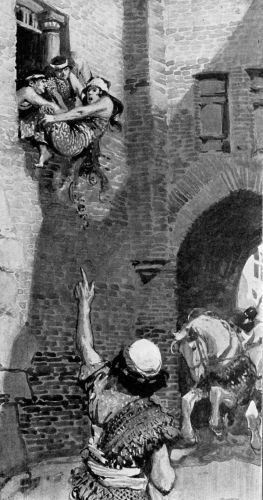
Soon after, Jezebel’s vile atrocities ended when some of her servants threw her out a window to her death. Ravenous dogs consumed her body leaving only her skull, feet, and the palms of her hands—a violent end for a violent woman (2 Kings 9:30-37). There are no indications that she ever flagged in her devotion to her impotent god.

A woman of infamy

Jezebel is mentioned once more, this time in the book of Revelation:  “Nevertheless I have a few things against you, because you allow that woman Jezebel, who calls herself a prophetess, to teach and seduce My servants to commit sexual immorality and eat things sacrificed to idols. And I gave her time to repent of her sexual immorality, and she did not repent. Indeed I will cast her into a sickbed, and those who commit adultery with her into great tribulation, unless they repent of their deeds. I will kill her children with death, and all the churches shall know that I am He who searches the minds and hearts. And I will give to each one of you according to your works” (Revelation 2:20-23).

Opinions vary about this figure: She was a literal person of the time; she personified false prophets who troubled the current church and used the same tactics as Jezebel of old; and there are questions of prophetic ramifications. If nothing else, this is one more testimony of God’s uncompromising condemnation of idolatry and all its trappings. It also illustrates how long an infamous example can last.

 Jezebel through several lenses

Jezebel holds a certain fascination for Bible students and scholars. Some even champion her as courageous as she stubbornly pushes her agenda and when she meets her death. For most, though, she represents the embodiment of evil. Her name lives on today and has its own entry in most dictionaries as an offensive term for a women regarded as sexually immoral or manipulative (Encarta Dictionary online) or any woman regarded as shameless, wicked, etc. (New World Dictionary of the American Language, 2nd college edition).

What a sorry legacy.