Category Archives: Uncategorized

How flax was made into linen on the frontier

I wish there had been YouTube in the New Testament times.  Just think what we could learn!  I found this video helpful to demonstrate how labor intensive the process of turning flax into linen was, even as late as the 1700s. Imagine what it must have been like during Dorcas’s time.

Dorcas: exploring her service and her craft

Was Dorcas a poor widow or a woman of means?

The scriptures don’t say if Dorcas supported herself by weaving and did charitable works on the side, or if she had enough means to serve the widows without earning a living.

That she was “full of good works and charitable deeds” might mean she was free to devote herself full-time to doing good, or it may indicate she was fully committed to doing good deeds with the time available to her.

That the widows mourned her death and showed Peter the things she had made “while she was with them” may indicate she, too, was a widow and among a group of widowed ladies who encouraged and supported one another.

Whether Dorcas owned a weaving business or made garments for charitable purposes, she practiced her craft. The Holman Bible Dictionary under the topic of “Cloth and Clothing” states that the “Book of Proverbs depicts a woman who spends much time spinning and weaving of fabric.”

Unger’s Bible Dictionary states, “The making of clothes among the Israelites was always the business of the housewives, in which women of rank equally took part” (p. 319).

In her hometown of Joppa, would Dorcas have been known as a “weaver” or a “seamstress”?

Dorcas would have been known as a weaver.  Weaving was common in Israelite homes—primarily the business of women. Families made their own fabrics for garments, sails, tents, covers and curtains. Widows who owned looms were known to support themselves by weaving.

A garment such as a tunic could be woven without a seam. Jesus’ tunic is described as seamless (John 19:23-24). His tunic was woven without a seam and valuable enough that the soldiers casts lots for it. The cloak they divided into four parts. Christ’s cloak may have been constructed by seaming together four smaller woven panels. The word “divided” is used rather than “ripped” or “torn.”

Iron needles were common, so weavers were able to sew larger garments from smaller panels of fabric woven on a household loom.

Did men and women wear the same kind of clothes?

Men and women wore tunics under their outer garments. Their cloaks differed slightly in materials or length, but both men and women wore loose, flowing attire. The word translated “garment” in Greek also means apparel, cloak, clothes, robe, dress and vesture (Strong’s 1440). Illustrators and commentaries describe a tunic as the garment worn under the outer cloak, which may have sleeves.

The main distinction between the dress of men and women had to do with veils and headdress (Unger’s Bible Dictionary, p. 320).

Was Dorcas a member of a weavers’ guild?

Scripture doesn’t say if Dorcas was an independent weaver or a guild member. It is likely that weavers’ guilds existed in large towns. Holman’s Online Bible Dictionary states that weavers were professionals and specialists in particular types of work:  weaving, designing and embroidering.

Whether or not Dorcas belonged to a guild, she was probably acquainted with all aspects of her craft. Scripture states that she made “tunics and garments,” the ordinary clothing worn by poor widows. She may have produced festive and decorative garments, too, but attention is called to the everyday clothing she made.

The most popular home loom in Dorcas’ time was a “warp weighted loom.” Threads were attached to a horizontal beam at the top of this small vertical loom. The threads were held to the ground by stones or hunks of clay called “loom weights.” The weaving proceeded from top to bottom (Holman On-line Bible Dictionary, “Spinning and Weaving”).

What were clothes made of?

The most common fibers used in clothing were linen from the flax plant and wool. Flax grew wild in Palestine and was domesticated in Galilee, Egypt, and Syria.  Cotton grew in Egypt on tree-like plants and was expensive. Cotton and silk were used in clothing for the wealthy.

The linen industry at the time of Christ was highly esteemed (Jewish Encyclopedia, “Flax”). The finest linen came from Egypt and Syria, but Galilee produced a very acceptable quality of linen. Flax fibers are stronger than cotton although less elastic. Of golden color and lustrous, the flax fibers when woven into linen repels insects and dirt. When properly prepared, linen resists shrinkage and is cool to wear. The production of linen, however, was labor-intensive.

“Flax was planted in…November and gathered almost four months later. It had to be separated from its seeds, bunched, retted, laid in the sun, and immersed in water to bleach and soften it for crushing. The flax fibers were beaten out of the woody portions, and it was drawn by a comb like implement into thread for weaving on looms” (Unger’s Bible Dictionary, p. 778).

Likely Dorcas spun her own thread from the prepared flax, as there are many biblical references to spinning thread. The prepared, flax fibers were gathered loosely and twisted by hand to make thread or twisted on a spindle, a hand-held twirler that draws out the thread (Prov. 31:19). The earliest drawings of spinning wheels come from China and Baghdad in the 11th century (Wikipedia, “Spinning Wheel”), so Dorcas did some form of hand spinning.

After the fibers were spun into thread, the women loaded their home looms with the threads and wove them into fabric. Linen panels were sewn into loose fitting cloaks.  Linen threads were woven as one-piece into tunics, scarves, and headdresses.

The natural linen fabric was cream, ecru, and shades of beige. The festive garments were dyed purple, blue, and red. Natural dyes from plants, insects and marine life created a variety of colored fabrics. Skilled clothiers decorated white festive garments with shells, stripes of colored material, gold, silver and jewels.

What does this background add to our understanding?

The widows greatly valued the clothing Dorcas made for them. Hers was a labor of love. Working with flax, the primarily fabric of her day, was labor intensive. If she supported herself by weaving, the garments she made for the poor were done with the time she had after regular work.

If she didn’t run a clothing business, her weaving efforts were still significant. The widows acknowledged that by showing Peter the things she made.

Scripture does not say that her good works and charitable deeds were limited to making garments.
Tomorrow a behind-the-scenes look

Tomorrow Mary Hendren, a good friend and fellow writer, provides a behind-the-scenes look at Dorcas’s charitable deeds. You might be surprised to learn what all was involved.

Mary, an avid student of the Bible and the wife of a minister, is a  mother and grandmother. She says, “I am interested in gardening and volunteer at the Corpus Christi Botanical Garden. I enjoy photography and reading books about history and travel.”

Meet Dorcas

Acts 9:36-43

36 At Joppa there was a certain disciple named Tabitha , which is translated Dorcas. This woman was full of good works and charitable deeds which she did. 37 But it happened in those days that she became sick and died. When they had washed her, they laid her in an upper room. 38 And since Lydda was near Joppa, and the disciples had heard that Peter was there, they sent two men to him, imploring him not to delay in coming to them. 39 Then Peter arose and went with them. When he had come, they brought him to the upper room. And all the widows stood by him weeping, showing the tunics and garments which Dorcas had made while she was with them. 40 But Peter put them all out, and knelt down and prayed. And turning to the body he said, “Tabitha , arise.” And she opened her eyes, and when she saw Peter she sat up. 41 Then he gave her his hand and lifted her up; and when he had called the saints and widows, he presented her alive. 42 And it became known throughout all Joppa, and many believed on the Lord. 43 So it was that he stayed many days in Joppa with Simon, a tanner. NKJV

Preface

The Church of God was in its infancy, growing daily as the apostles preached and members spread the word in their own communities. It also faced great persecution from threatened Jewish authorities, often at the direction of a man named Saul (Paul).

When the astonishing word of Paul’s conversion spread, those who had fled for their lives reacted first with fear and disbelief, and then pure relief. It was the mid 30s AD, and “… the churches throughout all Judea, Galilee, and Samaria had peace and were edified. And walking in the fear of the Lord and in the comfort of the Holy Spirit, they were multiplied” (Acts 9:31).

Her city

While the Bible doesn’t refer to a specific church at Joppa, it does mention disciples and saints who lived there (Acts 9:38, 41). It is an ancient city with a history. Joppa was part of the territory assigned to Dan; it was the delivery port for wood floated down from Lebanon for Solomon’s palace and temple (II Chron. 2:16); and it was the ancient seaport from which Jonah tried to run from God (Jonah 1:3). http://www.youtube.com/watch?v=TAuST_p03h0&feature=related

Even pirates roamed its waters from time to time. Josephus mentions Joppa’s rough shores contributing to shipwrecks and death (The Wars of the Jews, Book 3, Chapter 9:3)—a likely cause of widowhood for some in Joppa. http://www.youtube.com/watch?v=pejcOWYE2fU

Her story

To the eye of a casual observer, Joppa probably looked and functioned like any other city of its size. But within its hustle and bustle, a disciple named Tabitha* (Dorcas in the Greek) earned a reputation for doing good works and charitable deeds. Was she a philanthropist who supported local widows out of her own resources, or did she belong to a community of widows that was active among the disciples at Joppa? Whichever the case, the Scriptures record that she made tunics and garments as at least part of her charitable deeds.

Then “it came to pass in those days that she was sick and died” (Acts 9:37). The disciples in Joppa knew Peter was in nearby Lydda, some ten miles away. Knowing of the miracles that often accompanied his preaching, they sent two men to the Apostle imploring him to come to Joppa quickly.

Arriving a few hours later, grief-stricken widows greeted Peter, mourning the loss of their beloved friend. Clearing the room where she lay, Peter prayed and said, “Tabitha, arise.” She opened her eyes, her life restored! Word of the miracle quickly spread throughout the environs, and “many believed in the Lord” (verse 42).

Afterwards

Peter remained in Joppa for a time and another miracle occurred—the vision that led to the opening of salvation to the Gentiles (Acts 10). And though the church at large continued to grow, rumblings of discontent and fears of sedition troubled the land. Jewish unrest grew under the tightening control of the Romans, making confrontations inevitable and frequent. Military forces moved down the coast of Palestine, burning and destroying cities as they went. In the fall of 66 AD, an army was ordered to take the walled city of Joppa by surprise, and keep it, if possible.

Meeting with no resistance, Josephus records that “soldiers fell on them, and slew them all, with their families [some 8,400 residents by his account], and then plundered and burned the city” (Wars of the Jews, Book 2.Ch.18,10). And so the place that had witnessed the mighty works of God a few decades earlier was no more.

The Bible is silent as to the fate of Dorcas and the rest of the saints in Joppa. But her story continues to bear witness, to any who might care to read, of the miraculous power of God and, of a woman who ministered, not with words, but with charitable deeds.

*Referred to as Dorcas throughout.

Named prophetesses in the Bible

A recent Memory Checker asked how many named prophetesses are found in the Bible.

Here is the list:

Miriam (Exodus 15:20)
Deborah (Judges 4:4)
Huldah (2 Kings 22:14-20; 2 Chronicles 34:22-28)
Noadiah (Nehemiah 6:14)
Anna (Luke 2:36)

There are two references to unnamed prophetesses:
Isaiah’s wife (Isaiah 8:3)
Philip’s four virgin daughters (Acts 21:8-9)

References in prophecy:
Joel 2:28 (also quoted in Acts 2:17)

Self-proclaimed:
Jezebel (Revelation 2:20)

There are many opinions and speculations concerning the duties and activities of prophetesses, but the references listed above are all the Bible has to say on the matter.

Anna the Prophetess: A Life in Three Verses

Now there was one, Anna, a prophetess, the daughter of Phanuel, of the tribe of Asher. She was of a great age, and had lived with a husband seven years from her virginity; and this woman was a widow of about eighty-four years, who did not depart from the temple, but served God with fastings and prayers night and day. And coming in that instant she gave thanks to the Lord, and spoke of Him to all those who looked for redemption in Jerusalem. Luke 2:36-38 NKJV

Several years ago my husband and I found ourselves in Jerusalem during the Feast of Tabernacles, surrounded not only by the history of the Bible, but also immersed in the culture of the land.

During a day tour of some well-known biblical sites, our group listened as the minister explained the significance of the particular location. Distracted by the sounds of happy people walking down a nearby road, we all turned to look. “It’s a wedding procession,” our guide explained as the celebrants continued on their way.

Meet Anna
It occurs to me now that what we witnessed was probably very like a day in the life of Anna so many hundreds of years ago. I can imagine her, very young, perhaps 13 or so, dressed in her elaborately embroidered wedding clothes and adorned with jewels, gifts from her future husband. She may have been only 12 when the marriage was arranged, her father, Phanuel, accepting the customary dowry as a sort of compensation to him for the loss of an “asset.” Then the yearlong betrothal period began, the future union assured.

Anna’s roots
Phanuel came from the somewhat insignificant tribe of Asher, his family likely a part of a small devout group of exiled Israelites who returned after their Assyrian captivity. It is possible that Anna, from a very young age, was taught to anticipate the arrival of the promised Deliverer of Israel.

From wife to widow
What were those early years of marriage like for Anna? I wonder. Children were a blessing from God, and the more the better, especially if they were sons. There is no record of children for Anna, and being barren would have been a source of great grief. But that was only the beginning.

Seven years after that joyous wedding procession, Anna found herself suddenly widowed and vulnerable. Her options were few: return to her father’s home or enter into a levirate marriage. The Scriptures make no mention of either in Anna’s life, so quite probably she eventually sank into a life of poverty.

A lifetime later
By the time we meet Anna in Scripture she is old—at least 84 and possibly even past 100. She has  found sanctuary and fulfillment within the temple precincts, probably living in a small cubical adjacent to the Court of the Women. Luke says she “did not depart from the temple, but served God with fastings and prayers night and day.” And with good reason.

Eyewitness to a dangerous world
Anna’s world had been fraught with conquest and violence. In her lifetime she had witnessed the Roman general Pompey arriving with his legions in Jerusalem. She lived through the bloody Jewish rebellion as Rome tried to divide their territory. She survived horrifying events as Herod mounted a siege attack on Jerusalem in 37 B.C. to quash all resistance to him as “King of the Jews,” and the resulting slaughter of its inhabitants, even those seeking refuge in the temple.

It must have been distressing to watch political maneuverings during temple proceedings among the religious leaders of the day. Year after year she endured, and year after year she faithfully served God, praying and fasting and clinging to the hope of redemption in Jerusalem.

Prophetess, mentor or both?
Anna is called a prophetess. Did she have a special gift of being able to foretell specific future events? She certainly looked for the Messiah and spoke often about that hope.

Or was she a mentor? Matthew Henry’s Commentary comments on Luke 2:36: “Perhaps no more is meant than that she was one who had understanding in the scriptures above other women, and made it her business to instruct the younger women in the things of God.” (From Matthew Henry’s Commentary on the Whole Bible: New Modern Edition, Electronic Database, 2003, Biblesoft, Inc.) Whatever the case, her dedication was rewarded in an unexpected event.

Blessings and thanksgiving
On a very special day a young mother named Mary brought her firstborn son to Jerusalem to dedicate Him to the Lord and to offer a sacrifice of purification. Anna must have witnessed or even assisted in such activities often over the years, but this occasion was much different. Simeon, a just man waiting for the consolation of Israel, under the inspiration of the Holy Spirit offered a special blessing over this tiny infant whom he cradled in his arms.

Overhearing Simeon’s words, Anna knew that she had just seen the child destined to become the light of the gentiles and the glory of Israel. Luke says, “And coming in that instant she gave thanks to the Lord, and spoke of Him to all those who looked for redemption in Jerusalem” (2:38).

A life in three verses
Though Anna’s life is reduced to only three verses in the whole of the Bible, those three verses provide an inspiring portrait and model of a truly godly woman—one who didn’t flag in her dedication to God, her service to others or in her unwavering hope for the future

By way of explanation

WomenfromtheBook Blog: Introduction, Part 2

Today I’ll explain my approach for future postings, and include some research basics.

Good research depends on the quality and integrity of the sources consulted, and not all sources are equal. Of course, a primary source tops the list, and for me that is the Bible. Everything I incorporate from secondary sources will serve only to add further texture and dimension to what the Bible provides.

As for research basics, here are a few I consider most important:
• Cross-check sources to verify information.
• Provide links when possible; otherwise furnish citations where appropriate.
• Keep research files in case of questions or fact-checking.

Before I close, let me ask how many women you were able to recall after yesterday’s Memory Checker? 10? 20? All 188? I’m keeping my list for future reference—seeds for blogs to come.

Memory Checker: List at least four prophetesses who are named in the Bible.

And speaking of prophetesses, we’ll meet one in the next post. Until then, thanks for stopping by. Fellow travelers are always welcome!

A New Blog is Born

WomenfromtheBook Blog: An Introduction

Welcome to my new blog, one dedicated to researching women from the Bible. This topic has been a decades-long interest for me. I hope it might become one for you, too, as I share my journey of discovery.

A new beginning
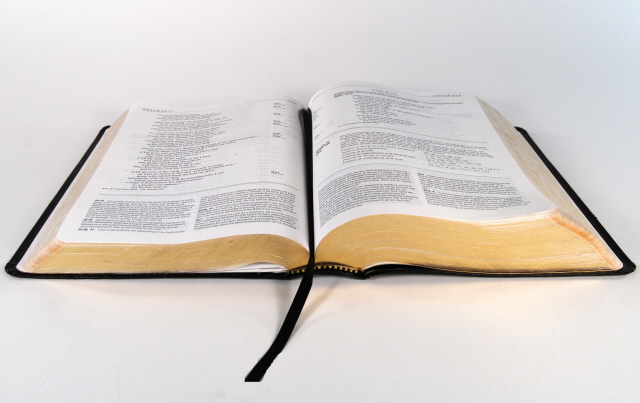
Several years ago I began breaking in a new Bible. I have adopted the habit of marking my Bible with color-coding for various topics: red for commandments; blue for fulfilled prophecy, purple for promises, and so on. This time I added a new color—pink—for women. I didn’t just highlight specific women, like Eve, Rachel, Leah, or Tabitha; I also marked terms for categories of women, like prophetess or widow.

My ongoing goal has been to read the Bible through in one year. So the new Bible gave me the perfect opportunity to begin a year of reading and to mark a clean copy of the Bible at the same time. It’s amazing now when I flip through its pages to note all the pink, and still I find some that I have overlooked.

A caveat
One caveat to reading through the Bible by schedule is that meeting the daily reading requirement can easily become an end in itself. I have found myself simply reading over many details and personages in order to get to the end of the day’s assignment. Now I’m trying to train myself to keep a careful eye out for women as I read. I have a Bible reading notebook, and frequently note a name or question to remind me to look for further details.

Avoid a dead end
I’ve learned several lessons along the way and I’ll share an obvious one: the farther one goes back in history, the fewer the resources that are available; and the fewer the resources, the more speculation fills in the blanks. I plan to avoid speculating unless I clearly identify it as such.

Here is a case in point. I participated in a women’s conference some time ago, my general topic being women from the Bible. As an ice-breaker I gave all the attendees a handout and asked them to write down the names of several Bible women they found interesting, with the promise that we would come back to it later in the session. Ultimately I asked them to refer to their list, choose one name, and find out all they could about their person, answering questions of who, what, where, when, and why. I have no way of knowing if any followed through, but I’m hopeful.

Most of those attending picked predictable women like Martha, Mary, Ruth, and Esther. One, however, chose Eve. I mention this because some Bible personalities lead to a dead-end when it comes to historical or cultural research. There is plenty of material about Eve with regard to doctrine or as an object lesson, but it is impossible to research her further than what the Bible itself reveals.

Next time
In the next blog I’ll explain my approach for future posts and include some research basics as well.

Memory Tester: Wikipedia states there are 188 named women in the Bible. List as many as you can from memory.

Until next time, thank you for visiting WomenfromtheBook Blog.

PS Please check the About and Resources tabs for more information.